Filipino craftsmanship from pineapple and pearl power

A brief continuation from the last post where I reconnected with my Filipina heritage. Yesterday (12 June) was Philippines Independence Day! I’ll be showcasing some Filipino craftsmanship I fell in love with by reading fashion magazines, innovation, and heritage.
Whenever I had the privilege of holding a piece of jewellery or clothing from my grandmother, I never saw it as just an “accessory.” To me, it was a physical piece of history; made from resilience and stories passed down through our family. One day, I hope to pass these on too.
Read Charisse Buenaventura’s fashion and heritage feature from my previous post here 👑
La Piña

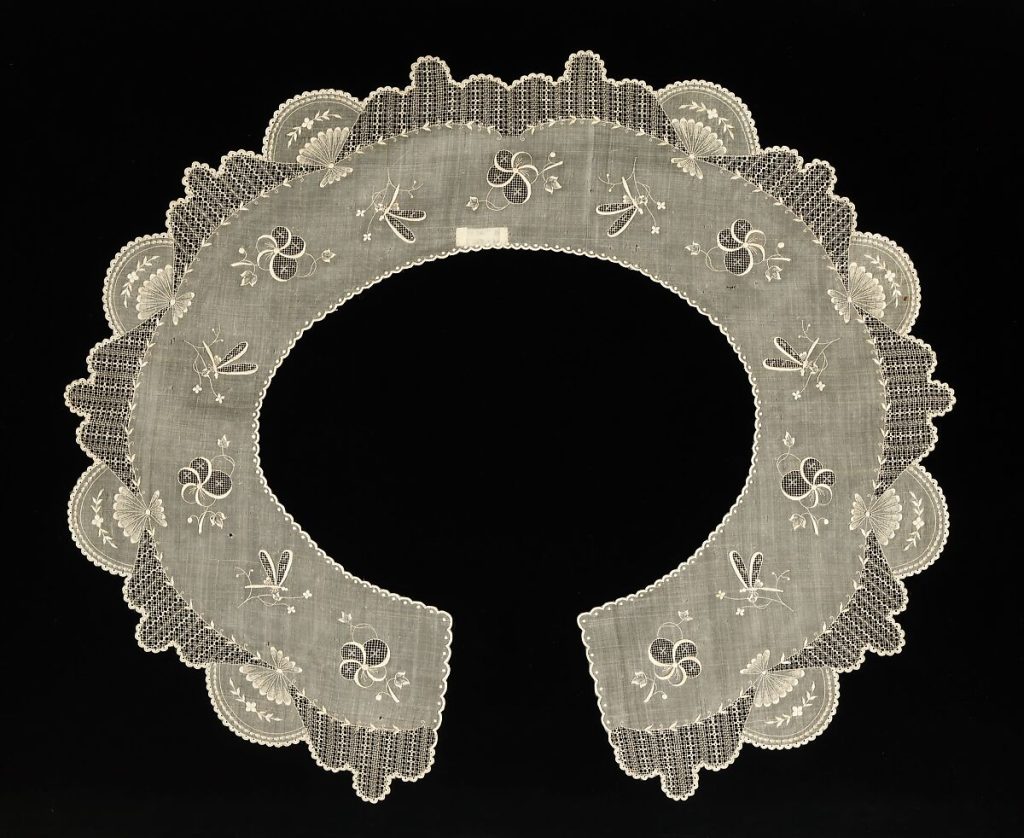
In the Philippines, a heritage craft we’re proud of is our talent for weaving. We also invented the piña, a traditional Philippine fabric made from pineapple leaves. The overall composition is a sheer, silky fabric with a slight stiffness, and the additional advantage of being ‘ethically-made’. Perfect for a hot, humid climate. It may be delicate as a fibre, but the fabric is actually quite durable. Piña is also an excellent fibre to be mixed with other types such as silk and cotton, creating modern hybrids. As it is a cellulose-rich textile, it’s entirely biodegradable.
Though the pineapple is native to South America (because of the Spanish ’explorers’), Filipinos developed the fabric from harvest waste. However, piña garments were so rare and labour-intensive that only the wealthy could afford them.
Pineapple leaves are still a major byproduct from harvesting, so they’re either burnt or end up in landfill. We are beginning to see a better utilisation of the leaves from textile companies inspired by our invention, such as Piñatex® (pineapple leather, patent) and Piñayarn®.
How it’s made (traditionally)
Manufacturing piña fabric is still a long and expensive process as everything must be done by hand due to the delicate fibres. Machines are too harsh unless the fibres are coarse.
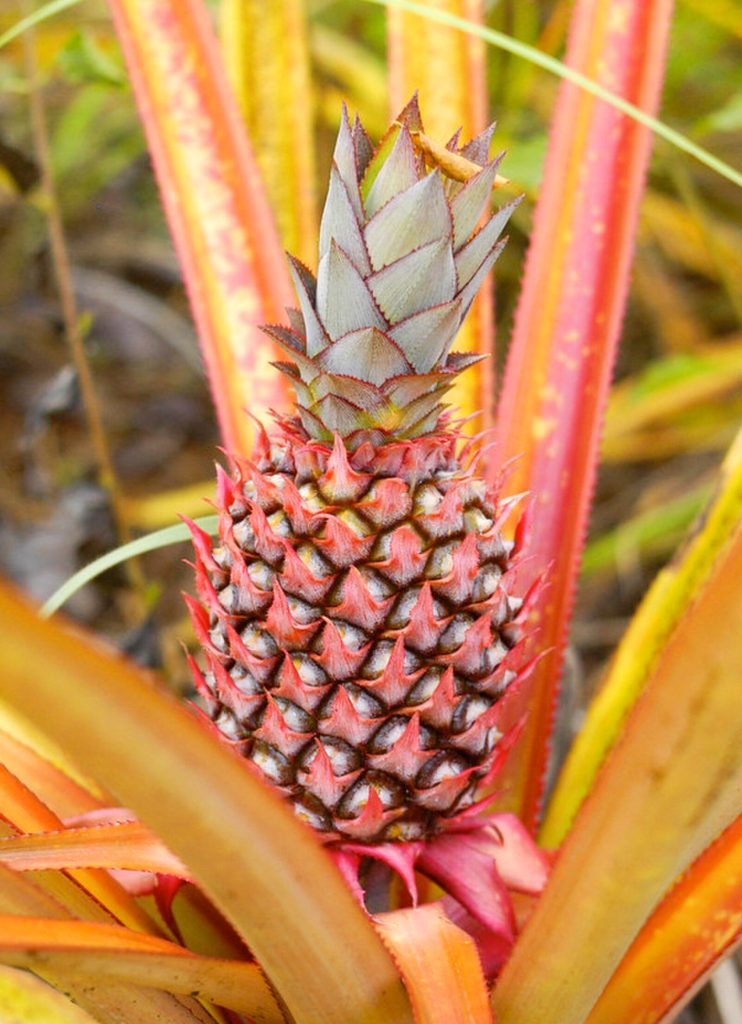
- Pineapple leaves are collected from the fruit after harvesting – the original piña used red spanish pineapple. Yes, it’s a red pineapple and tastes a bit more tart.
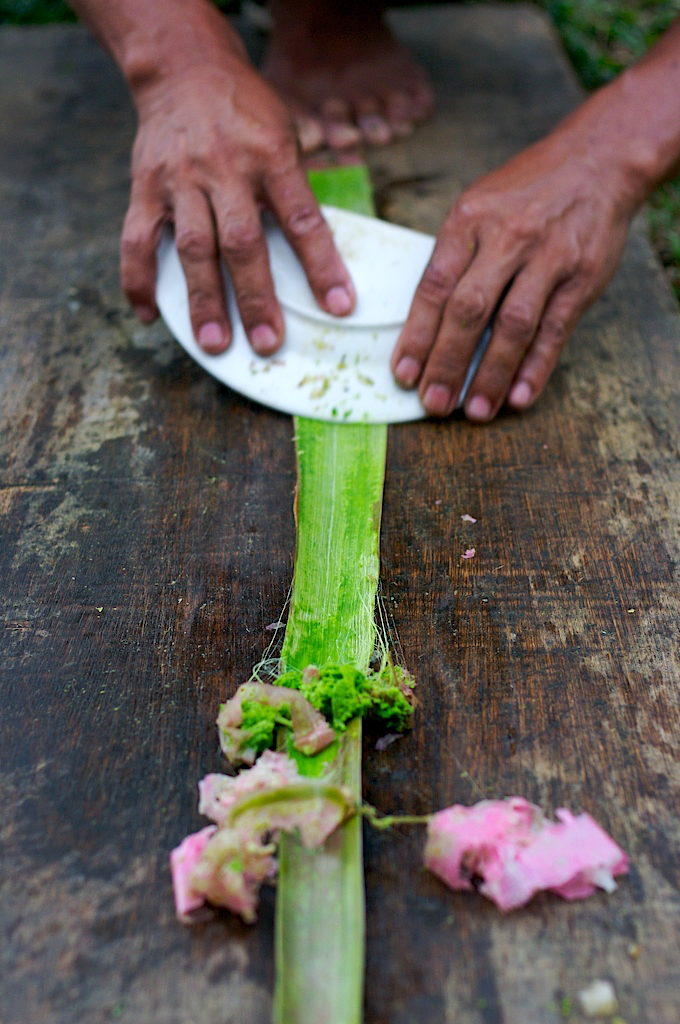
- The leaves are soaked for several days to soften it, which are then scraped with a pot shard to extract the fibres.
- The fibres are washed, dried, and combed.
- Each individual fibre is manually sorted from coarse to finest.
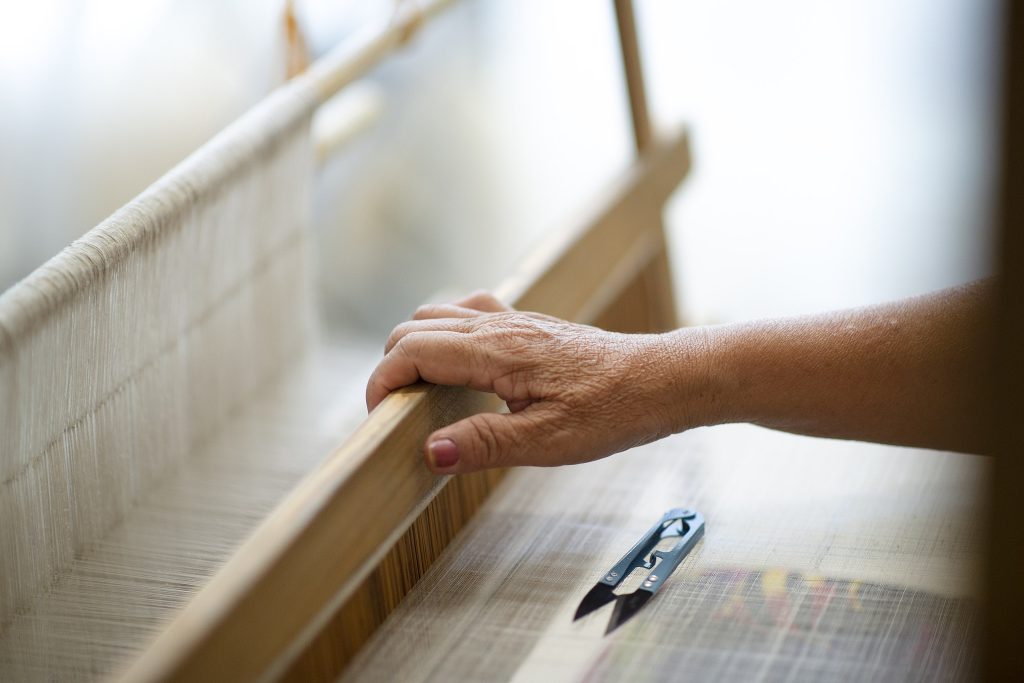
- The finest fibres are knotted together by hand in preparation for the weaving loom.
- The piña fabric is woven by the loom.
As a crocheter myself, I absolutely appreciate the attention and craftsmanship that’s needed in creating these time-intensive fabrics. Like crochet, it’s currently “impossible” to machine-create at a large scale (with the given technology.) Never mind the complex stitches.
It does appear the UK has some piña yarn. Perhaps I should crochet a shawl with embellishments?
La Filipiñiana
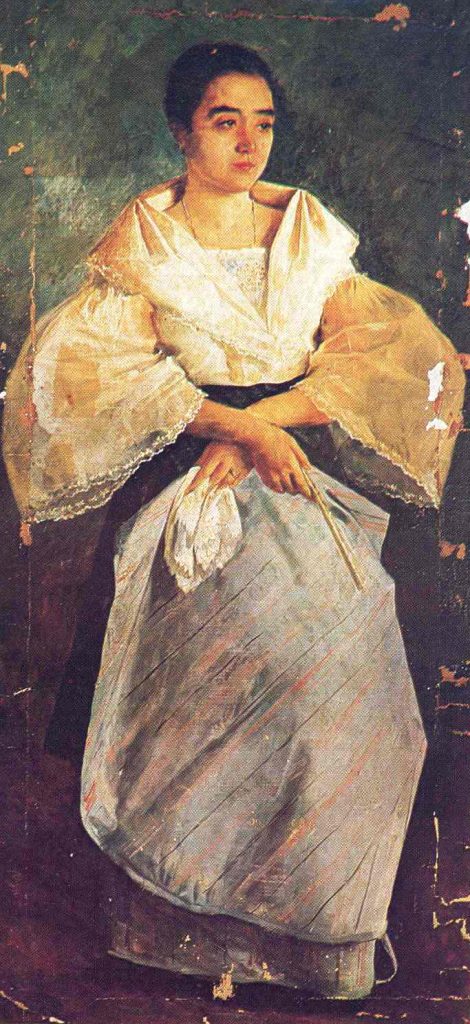
I’ve been heavily fascinated by Filipino fashion, particularly the Filipiñiana. The silk fabrics, the piña textures, the iconic butterfly sleeves. It’s nice to see modern Filipinas enjoy the garment again. I personally don’t have one (yet), but one day I will. They can also be blouses if you don’t like to wear dresses.
The Filipiñiana is a traditional dress typically made with piña. It also has different names; the Maria Clara dress, Barong at Saya, and Terno. Throughout history, the garment adapted to numerous styles according to the trends, a lot were from Spanish and western influences. Originally, it was a strictly two-piece set hence the term ‘barong at saya’, meaning ‘blouse and skirt.’ This type of clothing is very practical in a hot country. Now, modern pieces can be a one-piece dress or a contemporary two-piece made from different fabrics. Silk is a popular choice. The modern variation still has butterfly sleeves, but with a slimmer silhouette inspired by European fashion. We often call it a terno.
This statement piece is designed to be kept for a lifetime and gifted to future generations.
It is now the Filipiñiana is having a contemporary resurgence by innovative designers. One of the first designers was Pitoy Moreno, he even designed a dress for Princess Margaret.
There are modern Filipino designers inspired by heritage, to name a few; Patis Tesoro, JC Buendia, Mark Bumgarner, and Charisse Buenaventura.
And lots more!
There is a feature by Vogue Philippines, which I love so much, showcasing interpretations of the Filipiñiana worn by international ambassadors (my favourite is Nigerian Ambassador, Folakemi Ibidunni Akinleye, designed by Joey Samson): Fashioning A Nation’s Pride: Ambassadors Dressed In Filipiniana Honor Philippine Independence
Vogue Philippines: In the Studio With Patis Tesoro (some Filipiñiana design philosophy)
South Sea Pearls

One of my favourite gems is the South Sea pearl; the largest type of naturally occurring pearl grown within the pinctada maxima oyster. They’re formed when an oyster protects itself from irritation, like parasites and debris. Many are cultivated in the Philippines, especially in Palawan, where they grow to impressive sizes of 10–15 mm over the course of 2 to 3 years. Some variants can shimmer a lustrous gold hue, reminiscent of 24-karat gold.
I’ve always loved pearls for their deep symbolism of wisdom and resilience, they’re also known as the “Queen of Gems.”
In places like Palawan and French Polynesia, pearl farming is sensitive with the rhythms of nature. Pearl farmers monitor the health of their oysters daily, ensuring they live in clean, oxygen-rich waters. They can only be made if the ocean is healthy, so oysters are crucial indicators of local marine health. Like humans, oysters can experience stress, affecting their overall health. And when they suffer, they may not survive long enough to form a pearl. Let alone one of high quality. As filter feeders, each oyster can clean up to 190 L of water per day; straining out algae, excess nitrogen, microplastics, and suspended sediments. This natural filtration improves water clarity, reduces harmful algal blooms, and creates the perfect conditions for seagrass and coral to thrive. It’s no wonder pearl farmers are often considered the unsung heroes of marine conservation. Their work both depends on and contributes to the health of the ocean.
Pearl farming has become more sustainable due to these practices. We can now harvest pearls without harming the oyster. Just a little poke and a gentle scoop. A single pearl takes time and meticulous care, so it’s good that we’re taking care of the oysters and ocean.
With current levels of pollution, should it be a concern that future generations may no longer culture pearls in their natural environments? The same question lingers for chocolate and coffee, little luxuries that we take for granted. A future thought.
It’s inspiring to see the Philippines rise as a respected voice in fashion. We have the history, culture, sustainability (our country is sensitive to climate change), and most importantly, innovative designers. Perhaps we will see more Filipino influences on the catwalk in the next 5 years, especially with the help of social media.
Love,

